|
|
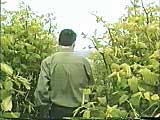 |
Once Japanese Knotweed has been seen and
identified, it is not easily missed. By late Spring/Summer it can
be above head height. Smaller stands are more likely when it is growing
in less hospitable places, e.g., through tarmac or concrete or by
walls. |
 |
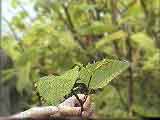 |
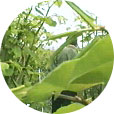
The leaves are heart shaped, non hairy
with a pointed end. The edges are smooth. New leaves may be folded.
After they unfold, 2 faint strips may be apparent along the length
of the leaf. |
 |
 |
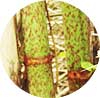
The stems of the plant are very characteristic.
They have a redish mottled pattern which resembles rhubarb. There
are clear divisions along the stem which again can be redish. |
 |
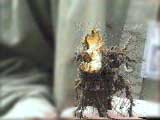 |
We do not suggest you pull up the plant
- this is dangerous as it could spread the plant, which is an offence
under the Wildlife and Countryside Act 1981. However this is what
part of the root system looks like. The creamy-orange colour is characteristic
of the underground stems (rhizomes). |
|
 -
Identifying Japanese Knotweed
-
Identifying Japanese Knotweed